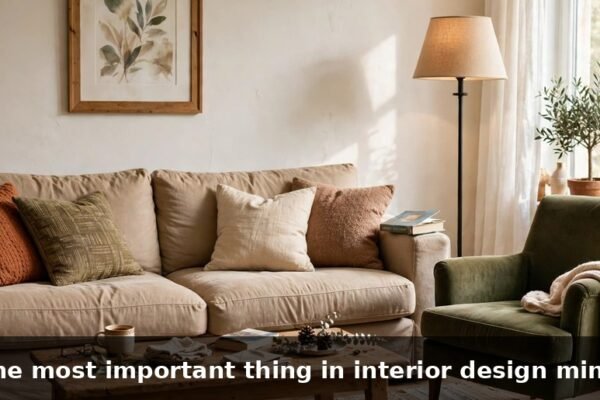

how to be better at interior design mintpaldecor starts with practice, not shopping: train your eye on proportion and colour, measure every room before you buy, and finish one small project at a time. This guide gives you a simple learning path you can follow in your own home.
Key Takeaways
- Getting better at interior design is a skill you practise, not a talent you either have or do not have.
- Train your eye first: look at rooms you like and work out why they work, before you buy anything.
- Measure every room and plan on paper, because most decorating mistakes are measurement mistakes.
- Practise colour on one small wall at a time, and keep a record of what worked.
- Finish one room before starting the next, and learn from each finished room before moving on.
What does getting better at interior design actually mean?
Getting better at interior design does not mean buying expensive furniture or copying a showroom. It means looking at a room the way a designer does: comparing the sizes of things, watching how light moves across the room during the day, and noticing how a colour on a small sample behaves once it covers a whole wall. That kind of seeing is a skill, and like any skill it improves with practice: look at more rooms, try more things, and pay attention to what worked.
The first step is to slow down. Most people decorate by buying first and thinking later, and then wonder why the room feels wrong. A better order is to look, measure, plan, and only then buy. Spend a week looking at your own rooms before you change anything: sit in each room at different times of day and note what annoys you — the corner that stays dark, the oversized chair, the wall colour that shifts in the evening light. Write it down. That list is your practice plan, and it costs nothing.
It helps to know why the work is worth the effort before you start. If you are still deciding whether this suits you, why interior design is interesting mintpaldecor explains what makes improving your own space so rewarding. The enjoyment matters, because you will only keep at it if you like the process itself.
How do you train your eye for proportion and balance?
Proportion is the relationship between the sizes of things in a room: the sofa against the wall, the rug against the seating group, the lamp against the table it stands on. When proportion is wrong, a room feels uncomfortable even if you cannot say why — a sofa too long for its wall makes the room feel crowded, a picture too small over a wide sofa looks lost, a coffee table too high makes sitting awkward. None of these are questions of taste. They are questions of measurement, and they can be learned.
Start by studying rooms you already like. Look at photographs of rooms, and instead of admiring the whole room, measure it with your eyes. How much wall shows above the sofa? Is the rug big enough for the seating group it serves? As a practical estimate, a coffee table should sit about 35 to 45 centimetres from the sofa, and a rug should sit under the front legs of the sofa and chairs, with at least 15 centimetres visible beyond each front leg. These are not rules carved in stone, but they give your eye something to check against.
Then practise in your own home with things you already own. Move the armchair to the other side of the room and live with it for a day. Hang the picture lower — its centre should sit roughly 145 to 150 centimetres from the floor — and see how the wall changes. Moving furniture costs nothing, and each move teaches you something. Take a photograph after each change, because a photograph shows a room more honestly than standing in it does: things you stop noticing in person, such as a crooked frame, show up clearly.
How do you learn colour without guessing?
Colour is where most beginners guess, and guessing is expensive, because paint bought in the wrong shade has to be bought again. The way to learn colour is to practise it small: start with one wall, or even one piece of furniture. Buy a small tester pot, paint a large patch — at least a metre square — and live with it for three days. Look at it in daylight, in the evening, and on a cloudy day. Colours change with light, and a shade that looks calm in the shop can look cold or harsh on your wall. A tester patch costs very little, and it saves you from repainting a whole room.
Learn the simple structure of colour before you choose. Every room needs one main colour for the largest surfaces, one supporting colour for the larger furniture, and one accent in three small places — a cushion, a throw, a plant pot — and nowhere else. When a room feels busy, the usual cause is too many accents competing. When it feels flat, there is usually no accent at all.
A good practice project is a single accent wall in a room you use every day. Measure the wall first, then use a Paint Calculator to work out how much paint you need, so you order the right amount and buy both tins together for a matching batch colour. A standard wall of about 3 by 2.5 metres needs roughly 2 litres for one coat as a practical estimate, and two coats are normal. Painting one wall teaches you how to cut in edges, how to roll evenly, and how a colour behaves at full size — and if you do not like the result, repainting one wall is a weekend job, not a disaster.

Why should you measure and plan before you buy anything?
Measuring is the dullest part of interior design — and also the one that matters most. Almost every expensive mistake in decorating is a measurement mistake: a sofa that cannot fit through the door, a rug that stops short of the chairs, curtains that end halfway down the window, a wardrobe that blocks a socket. All of these are avoidable, and the only tool you need is a tape measure and a notebook.
Measure each room at floor level, because walls are rarely as straight as they look, and write the longest measurement if the two ends differ. Measure the ceiling height in two places, because floors and ceilings are rarely level. Measure every door and window, and note which way each door opens and where the radiators and sockets sit. Measure the doorways and stair turns before ordering anything large — a sofa that cannot get into the room is not a bargain. Sketch the room as a plain rectangle, write each measurement along its side, and file the sketch with your paint codes and receipts.
Planning on paper is the second half of the same habit. Before you buy, draw the furniture into your sketch at roughly the right size. Leave a walking path at least 75 centimetres wide between the seating and the television, and at least 60 centimetres of clear space on the side of the bed you get out of. Make sure the wardrobe door swings open without hitting anything. This kind of planning feels slow, and it is why experienced decorators rarely have to return things — a plan on paper is free to change, and a sofa in the wrong size is not.
How do you build a simple room-by-room practice routine?
The fastest way to get better is to practise on one room at a time, in a fixed order, so each room teaches you something before you start the next. The table below sets out a simple six-week routine — a starting point, not a rulebook: take longer on any week that needs it, because each week builds on the one before it.
| Week | Focus | Time as a practical estimate | What to do |
|---|---|---|---|
| 1 | Look and listen | One hour a day | Sit in each room, write down what bothers you, photograph every wall |
| 2 | Measure and draw | One weekend | Measure every room, draw a sketch for each, note doors, windows and sockets |
| 3 | Colour practice | One weekend | Tester patches on one wall, live with them for three days, then choose |
| 4 | Layout practice | One weekend | Move furniture only, no buying, photograph each arrangement |
| 5 | Light and textiles | One weekend | Fix bulbs and lamps, match curtains and cushions, add one rug |
| 6 | Finish and review | One evening | Complete one room, photograph it, write down what worked and what did not |
Start with the room you use most, because a finished room you live in every day rewards you daily and teaches you fastest. Work in the right order inside the room: repairs first, then paint, then flooring, then furniture, then small decoration. Finish one room completely before starting the next, so you always have a clean place to sleep and eat, and so the finished room can teach you before you repeat its mistakes elsewhere.
Keep a simple record as you go: a notebook, or a folder on your phone, with the measurements, the paint codes, the receipts, and a photograph of each finished room. When you start the next room, look back at the record first. You will see patterns in your own taste — the colours you keep choosing, the layouts that keep working — and those patterns are your style developing.
Every decorator makes mistakes, including professionals, and each one teaches you something if you write it down. The common ones are easy to name: buying decoration before fixing the layout and the light, choosing a rug that is too small, hanging pictures too high, matching everything exactly so the room looks like a showroom, and buying too much too fast. When something goes wrong, ask what you expected, what actually happened, and what you will change next time — a rug that is too small teaches you to measure the seating group first, and a colour that looks wrong teaches you to test a larger patch for longer.
What can learning interior design not do for you?
Practising interior design can make your home work better and look better, but it cannot fix everything. It cannot fix a damp wall, a leaking roof, a broken window seal or a floor that slopes. If a wall shows dark patches that return after cleaning, or paint that bubbles within weeks, the cause is water, not decoration. Call a builder or a damp specialist first, and decorate only after the cause is fixed and the wall is fully dry, which can take several weeks.
It also cannot make a very small room large, raise a low ceiling, or silence a noisy road. A bedroom that fits a double bed and one wardrobe will not become a suite by adding mirrors. Learning design helps you make the best of the room you have, not turn it into a different room — structural change, such as removing a wall, is a building project with permits and a professional, not a practice exercise.
Finally, learning takes time, and some jobs belong to a professional no matter how much you practise. Electrical work, gas work, structural changes and roofing are different from decorating, and mistakes there can endanger everyone in the house. Call a licensed electrician for new circuits and any work inside a consumer unit. Call a registered gas engineer for anything connected to a gas supply. Before removing a wall, get a structural engineer or qualified builder to confirm it is not load-bearing. Knowing where your practice ends and a professional begins is itself part of getting better.
| Skill | How to practise it | How you know it is working |
|---|---|---|
| Proportion | Move furniture, photograph each arrangement, compare | The room feels calm and nothing looks too big or too small |
| Colour | Tester patches, one wall at a time, three days each | The colour looks right in daylight and in the evening |
| Measuring | Measure every room, draw a sketch, check doorways | Nothing you buy needs returning for size |
| Light | Three layers in each room, warm bulbs, test at night | No dark corners and no single harsh light |
| Layout | Draw the plan on paper before moving anything | Walking paths stay clear and the room is easy to use |
Frequently asked questions
How long before I get noticeably better at interior design?
As a practical estimate, you will see a clear difference after finishing two or three rooms, which usually takes two to three months of weekend work. Real confidence takes about a year of steady practice, because taste develops slowly, through the record of what worked in your own home.
Do I need formal training in interior design?
No. Formal study helps if you want to work as a designer, but for your own home, practice matters more: looking carefully, measuring, testing colour in small patches, and completing one room before starting the next is how you learn most of what you need.
What is the cheapest way to practise interior design?
Move furniture you already own, clean the windows, replace dead bulbs, and use tester pots of paint on one wall. All of that costs almost nothing, and it teaches you more about proportion, light and colour than buying new furniture.
How can I tell whether a room is working well?
Live in it for two weeks after finishing. If you keep bumping into the same chair, or you avoid sitting in a corner, something is still wrong. A room that works is one you use without thinking about it.
Can I practise interior design in a rented home?
Yes, and renting is a good place to practise, because most practice changes nothing permanent: moving furniture, textiles, plants, rugs, lamps and tester patches on one wall with permission. Do not paint, drill or change light fittings without the landlord’s written permission.
Conclusion
how to be better at interior design mintpaldecor is a practice, not a purchase: look carefully, measure everything, test colour small, finish one room at a time, and write down what each room teaches you. Start with the room you use most, and let each finished room make the next one easier. For more home improvement advice you can measure, visit Mintpaldecor.