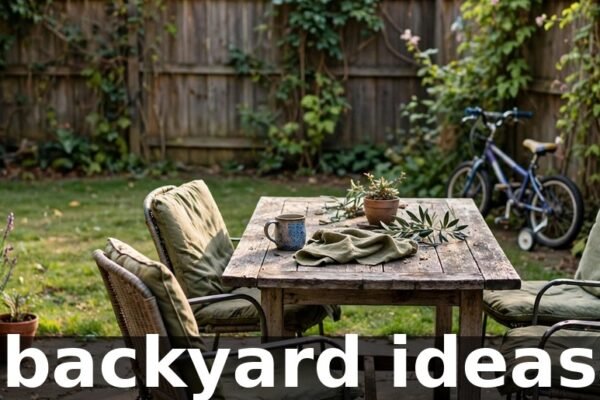
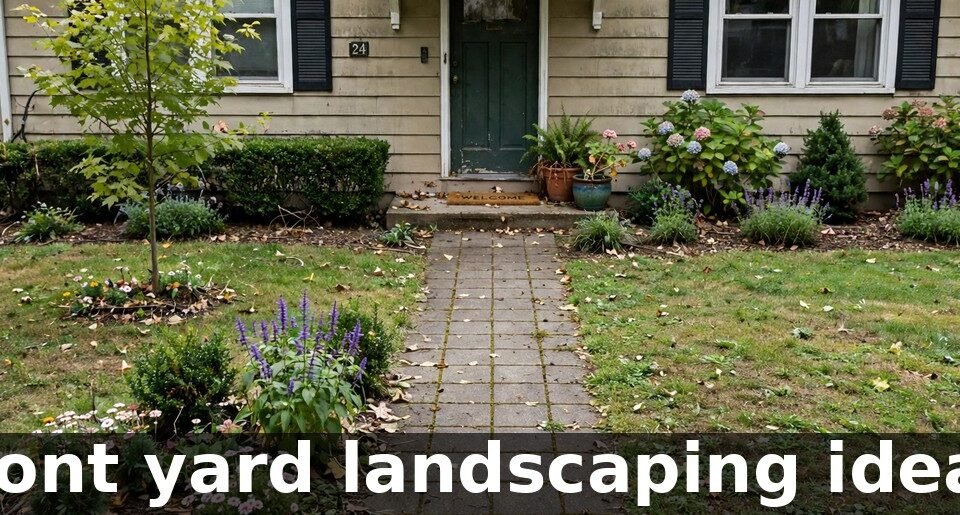
front yard landscaping ideas work best when the front of the house is planned as a first impression, not as leftover space. A clear entry path, planting that suits the sun the yard gets, and a low-maintenance structure give the street view order without turning the yard into hard work.
A front yard is the part of a home that everyone sees, including people who never come inside. It is the view from the pavement, the approach to the front door, and the first thing a visitor notices before knocking.
Many front yards end up as a strip of lawn with a path across it. The front yard has only a few jobs: lead people to the door clearly, frame the house rather than hide it, and look cared for through the seasons without demanding hours of work every week.
Key Takeaways
- A front yard is a first impression: plan the entry path and the view from the street before choosing plants.
- Plant by the sun and shade the yard actually gets.
- Structure comes first — path, edging, one or two anchor shrubs — and colour comes second.
- Low maintenance means the right plants in the right places, not an empty yard paved over.
- A front yard cannot fix a poor house front, a steep slope, or a shady plot on its own.

What makes a good front yard different from a backyard?
A backyard is private living space. It is where people sit, eat, play and spend long evenings, so it is planned around comfort and use: seating, shade, and planting that looks good from inside the house. A front yard is public-facing space. Its audience is the street, the postman, and the visitor walking up to the door, and its job is to welcome them and present the house well. That contrast — a private room at the back, a public face at the front — drives nearly every choice that comes next.
Because the front yard is seen mostly in passing, it needs to read clearly from a distance. A backyard can be full of small detail that only reveals itself up close; a front yard needs bold, simple shapes — a clear path, a defined lawn or ground cover, planting beds with edges that hold their line, and one or two plants large enough to anchor the view.
Privacy and use work differently at the front too. A tall fence or dense hedge creates a private room in a backyard, but across a front boundary it shuts the house off from the street and blocks light from the front windows. Low planting, an open fence, or a hedge kept below window height keeps the boundary defined without hiding the house. And nobody sits in the front yard for an afternoon the way they do at the back, so there is no need for seating or play equipment there.
How do you plan a front yard around sun and shade?
Sunlight is the first thing to observe, because it decides which plants will thrive and which will struggle no matter how well they are watered. Stand at the front of the house in the morning, at midday and in the late afternoon, and note which parts are in sun and which are in shade. A yard facing the morning sun gets gentle light; one facing the afternoon sun gets the hottest, driest light of the day; a yard shaded by the house may get only an hour or two of direct sun.
The house itself is usually the biggest source of shade at the front. A north-facing front stays cool and damp, so it suits shade-tolerant shrubs and ground cover, while sun-loving plants will grow leggy and flower poorly there. A south-facing front is the opposite: hot, bright and quick to dry, so it suits drought-tolerant shrubs, grasses and Mediterranean-type planting. Check the soil too — front-yard soil is often poor builder’s fill, so dig compost into the beds before planting.
The table below gives a starting point for matching planting to the light the yard actually gets.
| Front yard light | What it means | Planting that usually suits it |
|---|---|---|
| Full sun, most of the day | Hot and dry, soil dries fast | Drought-tolerant shrubs, ornamental grasses, lavender-type planting where the climate allows |
| Morning sun, afternoon shade | Gentle light, soil stays moist longer | A wide range of shrubs and perennials, including flowering plants that dislike hot afternoons |
| Little direct sun | Cool and damp, shaded by the house | Shade-tolerant shrubs, ferns in mild climates, ground cover that likes moisture |
| Windy and exposed | Drying wind, soft growth gets damaged | Sturdy evergreen shrubs, tough grasses, low hedging that can take a knock |
Once you know which parts get sun and which stay shaded, the planting plan becomes straightforward. Put sun-loving plants in the brightest part and shade lovers where the house shades the ground. Keep tall plants at the back of the beds, against the house or the boundary, and lower plants toward the path and the lawn, so the planting steps down toward the street and the house stays visible. When planting steps down in layers toward the street, the yard looks planned rather than accidental. The longer reasoning behind this way of thinking — why a garden is planned in layers and how planting relates to the building it frames — is the same kind of thinking that explains why interior design is interesting mintpaldecor, applied outdoors instead of in a room.
How should the path and the beds around it be shaped?
The path to the front door holds the whole front yard together. Its width sets the tone: a path too narrow forces visitors to walk single file and brush the planting, while one too wide swallows the beds and leaves the yard feeling paved. As a practical estimate, a path about 1.2 metres wide suits most houses — wide enough for two people to walk together and for a pram or delivery trolley to pass.
Lay the path where feet already go. If a bare strip already crosses the lawn, that is the route to pave — visitors will keep taking it whatever you build. Materials should suit the house: brick pavers for a brick house, stone flags for a stone house, plain pavers for a modern house, gravel for a cottage front.
Planting beds give the path its frame. One bed against the house wall and one beside the path — or both together — is plenty for most fronts. The bed beside the house takes the tallest planting, since it has the wall behind it and does not block the view of the house. Beds need a generous width: one narrower than about 60 cm dries out quickly and leaves no room for plants to grow into shape.
Quantities are worth working out before ordering, because gravel, mulch and soil are sold by volume and are awkward to return once delivered. Measure each bed and path area, decide on a depth — as a practical estimate, a mulch layer about 5 cm deep and a gravel layer about 4 cm deep are typical starting points — and work out the volume first. A Gravel Calculator can do the arithmetic once the measurements are known, so the order matches the beds rather than a guess.
How can a front yard stay easy to look after without looking empty?
Low maintenance is often misunderstood as doing nothing, and a front yard left to do nothing soon looks neglected rather than natural. The first step is to reduce lawn where lawn struggles: a small shaded front lawn always looks thin and weedy, and mowing a tiny patch takes nearly as long as mowing a large one.
Evergreen shrubs are the backbone of a low-maintenance front yard, because they hold the structure through winter when perennials die back and the yard would otherwise look empty. Two or three evergreens of different sizes — one large anchor shrub, one medium, one low and spreading — give the yard a shape that survives every season, while flowering perennials and bulbs add colour on top without being responsible for the structure.
The table below compares the main low-maintenance options for the parts of a front yard that usually cause the most work.
| Area | Low-maintenance option | Upkeep it still needs |
|---|---|---|
| Struggling shaded lawn | Shade-tolerant ground cover or a wider bed | An annual tidy and mulch top-up |
| Weedy open beds | Mulched beds with evergreen shrubs | Mulch topped up once a year, weeds pulled while small |
| Tired narrow path | Paved path with firm edging | Sweeping, and re-sanding joints when needed |
| Bare dry corner | Gravel with drought-tolerant planting | Occasional raking and weeding through the gravel |
| Overgrown hedge | A slow-growing hedge, kept below window height | One or two trims a year, at the right season |
Routine matters more than effort. A front yard that gets half an hour a month — a sweep of the path, a pull of the weeds while they are small, a trim of anything overhanging the path — stays ahead of the work, while a yard ignored for a year needs a weekend to recover. This is also where the front yard connects to the value of the house: a tidy front is the first thing a buyer or a valuer sees, and a yard that looks cared for suggests a house cared for inside as well. Framing the work that way — as home improvement mintpaldecor rather than gardening for its own sake — helps decide where to spend money: on the structure that lasts, not on short-lived colour.
What can front yard landscaping not fix?
A front yard can improve the look of a house a great deal, but it cannot fix everything, and expecting it to is the fastest way to spend money and be disappointed.
It cannot fix a house front that is in poor condition. Planting can soften a plain facade and draw the eye to the door, but it cannot hide peeling paint, a damaged roofline, or windows that need replacing. The right order is to repair the house front first — paint, pointing, gutters, the front door itself — and then plant to frame the result. A freshly painted door with a simple bed beside it does more for curb appeal than a large shrub in front of a door that needs attention.
It cannot fix a steep slope or a yard that floods. A yard that slopes sharply toward the house sends rainwater toward the foundations, and no amount of planting will change the direction water flows. Terracing, a retaining wall, or a properly built drain are building jobs, not planting jobs, and they need to be planned before the beds are dug.
It cannot create privacy where the house sits close to the street, and it cannot make a dark yard sunny or a hot, dry yard lush without constant watering. A front yard a few metres deep cannot hold a tall screen of planting without blocking light from the front rooms. The yards that look best are planted for the conditions they have, not for the conditions their owners wish they had.
Frequently Asked Questions
How much does front yard landscaping usually cost?
It comes down to the size of the yard and how much hard structure the plan needs. A small tidy-up — edging, mulch, a few shrubs and a swept path — costs far less than a new path and a full replant, because the path and hard surfaces are the expensive part.
What is the easiest front yard for a beginner?
A simple layout with a clear path, two or three evergreen shrubs, a mulched bed and a small area of lawn or ground cover. It has few plants to learn, little to go wrong, and it looks finished from the first season.
How closely should the front yard follow the style of the house?
Yes, as far as possible. A brick house suits brick edging and traditional shrubs, a modern house suits clean lines and grasses, and a cottage suits softer, looser planting.
How do I stop weeds taking over the front beds?
Mulch the beds thickly, plant closely enough that the ground is covered once the plants grow, and pull weeds while they are small. A membrane under gravel helps on paths and dry areas.
Can I landscape a front yard myself?
Most front yard work — measuring, digging beds, laying mulch, planting shrubs and laying gravel — is straightforward work for a homeowner with basic tools. Leave paths, retaining walls and drainage to a professional.
Conclusion
front yard landscaping ideas work when the front of the house is treated as a first impression with a clear path, planting matched to the sun and soil it actually has, and a simple structure that survives the seasons without constant work. Start with the entrance and the light, build the path and the beds before buying plants, and let evergreens carry the yard through winter. Accept the limits honestly, and the result will be a front yard that welcomes visitors and frames the house well. For calculators, guides and more ideas, visit Mintpaldecor.