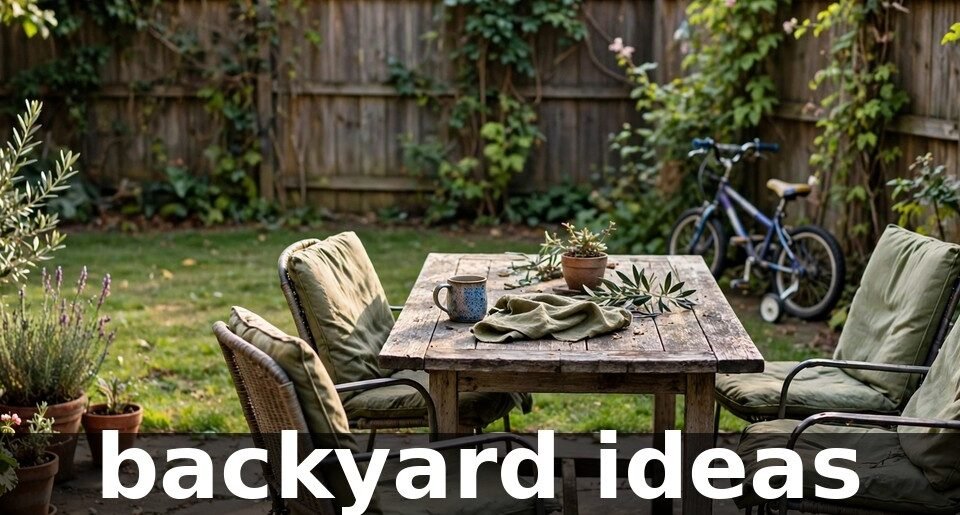
Good backyard ideas turn an unused patch of grass into a comfortable outdoor room for eating, resting, playing and entertaining. The best backyard ideas start with how the space will actually be used each week, not how it looks in a photograph.
Key Takeaways
- Start with use, not decoration: decide where people will sit, eat and play before buying anything.
- One comfortable seating area, used daily, is worth more than several half-finished zones.
- Shade, drainage and a clear path matter more than furniture.
- Plant for the conditions you have, not the garden you wish you had.
- Phase the work so the backyard stays usable while it improves.
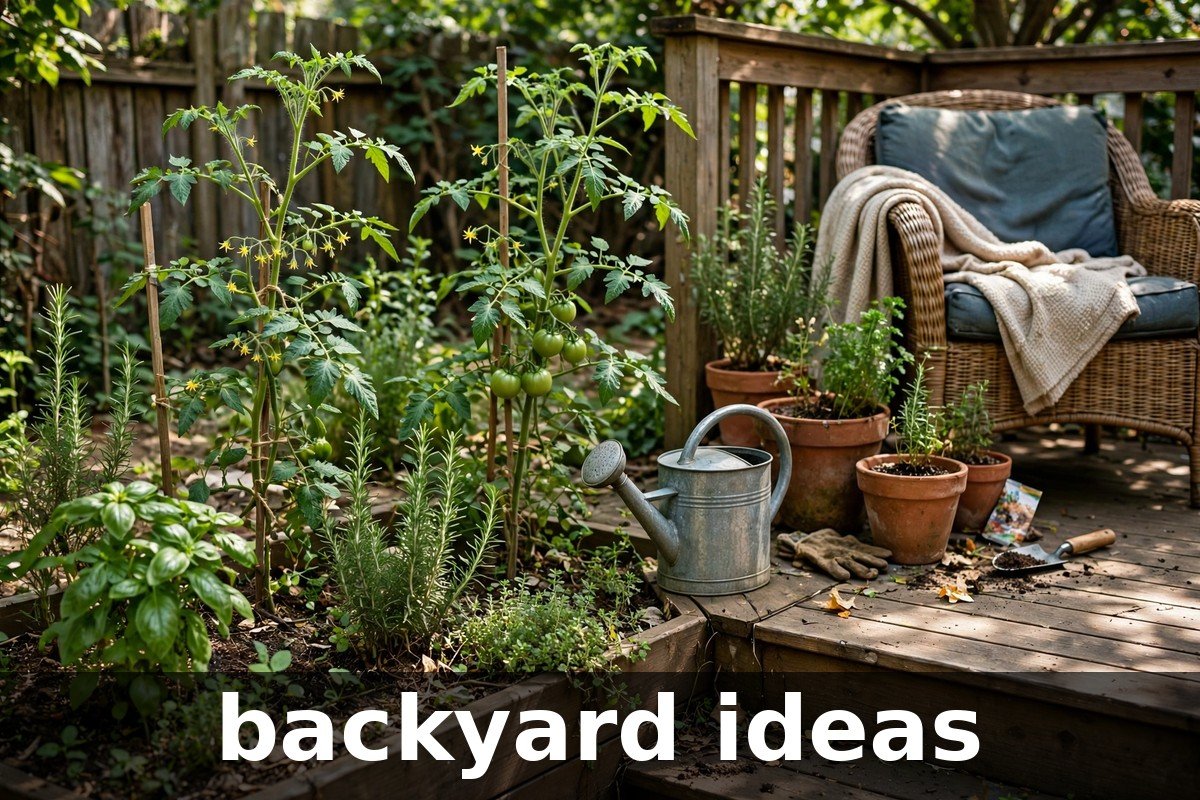
What Makes a Backyard Feel Like a Real Outdoor Room?
A backyard feels like an outdoor room with a clear purpose, a defined edge and a reason to step outside. Most backyards fail on the first point. They have a lawn, a fence and perhaps a patio, but no obvious place to sit, no shelter from the sun and no path inviting anyone further in. The result is a yard looked at through the window far more often than it gets used.
Treat the backyard like a room inside the house. A living room has a place to sit, a surface for a drink, adjustable light and something pleasant to look at. A backyard needs the same four things, adapted to the outdoors: seating first, then a table within reach, then shade you can control, then planting that makes the space feel finished. Boundaries help too: a low hedge, planters or a change in paving can mark where one area ends and another begins.
Scale matters as well. Oversized furniture in a small yard leaves no room to walk, while tiny chairs on a large patio look lost. Measure before buying. The yard is also seen from the kitchen window daily, so one planted bed against the fence changes daily life cheaply.
How Should You Plan Seating and Shade for Everyday Use?
Seating is the most important decision in any backyard, because a yard without a comfortable place to sit is a yard nobody stays in for long. Count how many people will use the space on an ordinary evening, not at a once-a-year party. A family of four needs four comfortable seats and a table they can all reach, with extra folding chairs stored for guests. Comfort is not a luxury: a hard chair will sit empty after ten minutes, while a cushioned chair with a sensible backrest and armrests will be used every evening. Outdoor cushions need washable covers or dry storage.
Shade decides when seating gets used. A patio in full sun is pleasant for about an hour in the morning, then too hot for most of the day. A shade sail, a pergola, a large umbrella or a well-placed tree each solve the problem differently. An umbrella is cheap and movable but covers a small area and needs a heavy base. A pergola gives structure but costs more to build. A tree gives the best shade but takes years to grow. Position matters just as much: watch where the sun falls in the late afternoon, when most families use the backyard, and seat people where the shade will be then.
A deck can create a level seating area on a sloping yard and give a clear edge to the outdoor room. Plan the size carefully: too small forces furniture against the railing, too large swallows the garden. A Decking Calculator can help with working out board quantities and approximate dimensions once the size and shape are decided, which makes it easier to compare quotes and avoid ordering far more material than the job needs. Add a simple path too, because a route across wet grass gets used far less than stepping stones or paving.
| Seating and shade option | Best for | Practical drawback |
|---|---|---|
| Dining set with umbrella | Family meals outdoors | Umbrella covers a small area and needs a heavy base |
| Lounge chairs with cushions | Relaxing and reading | Cushions need dry storage when it rains |
| Bench along a fence or wall | Small yards and casual seating | Fixed benches cannot be moved for parties |
| Pergola with cover | A permanent shaded dining area | Higher cost and needs solid footings |
| Shade sail | Large areas on a modest budget | Needs strong anchor points and seasonal removal in windy areas |
| Mature tree | Long-term natural shade | Takes years to grow to useful size |
What Plants and Lawn Choices Actually Work in a Family Backyard?
Planting is where many backyard plans go wrong, usually because the plants were chosen for how they looked in the nursery rather than for the soil, sun and care they will get. Be honest first: how much sun does each part get, how wet does the soil stay after rain, and how much time will anyone spend watering and weeding? Native and locally adapted plants are the safest starting point, because they suit the local climate and soil, need less water and feeding, and support local birds and pollinators. A local nursery can say which plants cope with the area’s summers and winters.
Lawns deserve a realistic decision too. A lawn is the most forgiving surface for children and pets, and nothing else feels quite the same underfoot. But it needs mowing, watering in dry spells and repair of worn patches where children play every day. In a very shady yard, grass struggles and turns to mud; shade-tolerant ground cover, mulch and a paved area will look better and need less work. Where children play, keep planting practical: thorny shrubs beside a play area and delicate beds next to a ball game invite trouble. Put sturdier planting at the edges, keep the middle open, and save delicate plants for a raised bed, which also suits herbs and vegetables children enjoy growing.
Herbs and vegetables are often the most rewarding part of a family backyard. A small raised bed with herbs, tomatoes or salad leaves needs far less space than imagined. Start with two or three things the family actually eats, rather than a large plot that becomes a chore. Group plants by water needs, use mulch to hold moisture in and keep weeds down, and think in layers: a taller shrub at the back, medium shrubs in the middle and low planting at the front gives depth.
How Do You Set Up a Backyard for Entertaining Without Overspending?
Entertaining works best when the setup is simple and the host can stay outside with the guests. That means a table already set, food that can sit out safely, drinks within reach and seating that lets people move around. Outdoor cooking is a natural centrepiece, but it does not need a full outdoor kitchen. A reliable grill, a flat surface beside it and a dry place for fuel are enough for most families; a built-in kitchen costs a great deal, needs plumbing and power, and is only worth it if used several times a week.
When it comes to current styling, the ideas that last are simple: natural materials, cushions in colours that can be changed cheaply, and lighting that flatters people. The latest decoration trends mintpaldecor page is a useful place to check how those ideas are being applied this season, and it is worth looking at before buying new cushions, so a small change of colour updates the space without replacing the furniture. Storage matters just as much: cushions, toys and barbecue tools need a dry place to live, and a single weatherproof storage box near the seating area solves most of it.
Think about the flow of people, not just the furniture: leave a clear route from the door to the seating area and on to the grill. Children and adults can share the same yard if the layout allows it: a corner with outdoor toys keeps younger guests happy, as long as they stay visible from the seating area. A practical estimate for a first entertaining setup, covering a table and chairs, an umbrella, a grill and a storage box, is far less than a built-in kitchen. Buy the everyday items first, then add party extras once the basics are in place.
What Can Backyard Ideas Not Fix?
A small backyard cannot hold a dining set, a lounge area, a play area, a vegetable garden and a fire pit all at once. Choosing two or three uses and doing them well beats squeezing in five uses badly. Light is a second hard limit. A yard shaded by tall buildings most of the day will never be a sunbathing spot, and one facing the afternoon sun will always be hot in summer. Shade and planting can soften this, but they cannot change the direction the yard faces. Design for the light you have: a shady yard makes a cool retreat, while a sunny yard suits dining.
Drainage is a third limit that decoration cannot hide. A yard that floods after rain, or where water pools against the house, has a drainage problem, not a decoration problem. Paving over it will not fix standing water. Poor drainage must be dealt with at ground level, with falls, drains or permeable surfaces, before the prettier work begins. Neighbours and rules are a fourth limit: fences have a maximum height in most areas, some structures need permission, and a tall hedge can create a dispute. Check local rules and talk to neighbours before building anything tall or close to a boundary.
Finally, a backyard cannot fix a house short of indoor space. An outdoor room is a wonderful addition in the warmer months, but it does not replace a bedroom or a study, and in cold or wet weather it will sit empty. Treat the backyard as a seasonal bonus, not a substitute for indoor space.
How Can You Phase a Backyard Project on a Realistic Budget?
Most backyards improve in stages, and that is a strength, not a failure. Phasing spreads the cost, lets the family learn how they use the space before committing further, and keeps the yard usable. The mistake is to start with decoration and leave the structure until later. The order that works is ground first, then shade and seating, then planting, then decoration. Ground work comes first because everything else sits on it: level what needs it, fix drainage, lay the main path and build the patio or deck. They are the hardest to change later, so get a proper quote rather than guessing.
Shade and seating come next, because they decide whether the yard gets used. A shade sail or umbrella, a table and chairs, and a storage box turn a finished patio into a place people sit in the same week. This is also the stage where a backyard project starts to feel like home improvement mintpaldecor in the full sense, because a usable outdoor room adds to how the whole house is lived in, not just how the garden looks. Planting follows, and it can be spread over time: trees and large shrubs early, smaller plants and herbs added a few at a time. Buying small plants and letting them grow is far cheaper than buying mature specimens.
Decoration comes last and should be the smallest share of the budget. Cushions, lights, pots and accessories are the easiest things to change and the easiest to overspend on. Live with the finished structure for a full season before buying decoration. Keep a small reserve in every phase for surprises; around a tenth of the phase budget is a practical estimate. Time the work to the season: ground work in dry weather, planting when the soil is warm and moist, shade in place before the hottest weeks.
| Phase | What it covers | Practical estimate of share |
|---|---|---|
| 1. Ground and drainage | Levelling, drainage, path, patio or deck base | Largest share, roughly 40–50% of the total |
| 2. Shade and seating | Shade structure, table, chairs, storage box | Roughly 25–30% of the total |
| 3. Planting | Trees, shrubs, beds, lawn repair, mulch | Roughly 15–20% of the total |
| 4. Decoration | Lights, cushions, pots, accessories | Smallest share, roughly 5–10% of the total |
Frequently Asked Questions
How much does a basic backyard makeover cost?
There is no single figure, because size, materials and labour rates change the cost a great deal. A modest makeover with seating, shade, planting and storage costs far less than a full redesign. Get a quote for the ground work first, then price furniture and planting separately.
What is the easiest backyard idea to start with?
A comfortable seating area with shade is the easiest and most rewarding place to start. It needs no building work, it can be set up in a weekend, and it immediately gives a reason to use the yard.
How do I make a small backyard feel bigger?
Keep the layout simple, use one or two areas rather than five, and avoid filling every corner. A clear path, planting at the edges, furniture that fits and a single focal point such as a small tree all help a small yard feel open.
Which plants suit a backyard that needs little upkeep?
Plants suited to the local climate and soil need the least care, so native and locally adapted plants are the best start. Match plants to the sun and water of each spot, group plants with similar water needs together, and use mulch to hold moisture in and keep weeds down.
Can I improve my backyard without a big budget?
Yes. Start with tidying, a seating area and shade, then add planting a little at a time. Small plants, gravel paths, a shade sail instead of a built structure, and working in phases all keep costs down.
Conclusion
backyard ideas work best when they start with real life: where people sit, how they eat outside, where children play and how much shade, storage and planting the yard can honestly support. A backyard does not need to be large or expensive to be loved. Build the ground properly, add shade and seating that get used every day, plant for the conditions you have, and let decoration follow the life of the yard. For calculators, guides and more ideas, visit Mintpaldecor.