
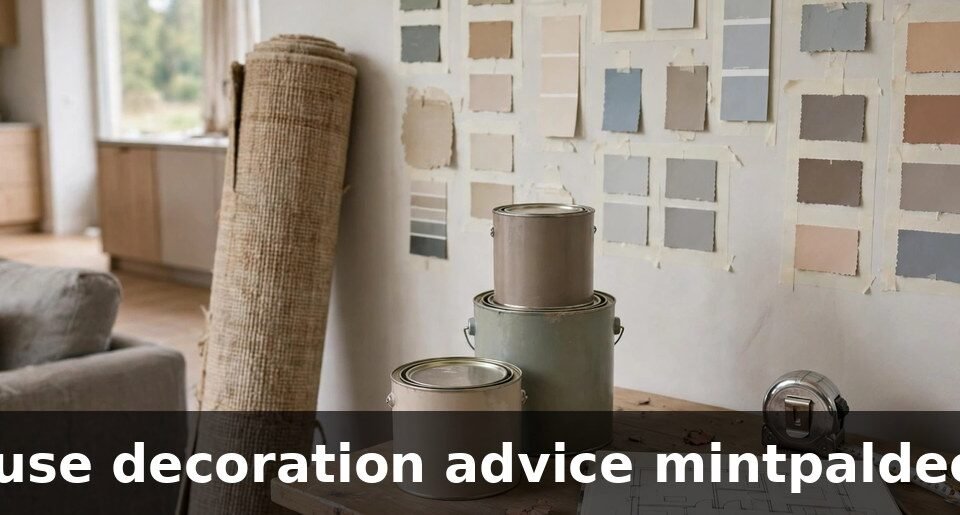
Good house decoration advice mintpaldecor starts with one clear idea: a whole house is a single project, not a pile of separate rooms. The choices you make early decide how much money, time and rework the job will cost later.
Key Takeaways
- Treat the whole house as one project and plan every room before buying anything for any single room.
- Build your budget from real measurements and real prices, then hold back 10 to 15 percent for surprises.
- Work in the right order: repairs first, then paint, then flooring, and furniture last.
- Choose a small colour palette and repeat it through the house so rooms feel connected.
- Call a licensed professional for electrical, gas, structural and lead-paint work.
How do you turn house decoration advice mintpaldecor into a whole-house plan?
A whole-house project usually fails before anyone opens a tin of paint. It fails in the planning, when each room is decided on its own and the house ends up as a set of unrelated choices. Start with a slow walk through your home with a notebook. For each room, write down what stays, what goes, and what is broken, and note what annoys you daily. Measure every room, and photograph each one from the doorway.
Next, give every room a scope in plain words. A refresh means new paint and soft furnishings, and it suits a room that already works. A full redecoration means new flooring, lighting and large furniture, and it suits a room that does not work at all. Rank rooms by urgency, not excitement. Put the plan on one page, with rooms in order, a rough budget per room and a finish date. Keep quotes, receipts and paint codes in one folder. A clear reason keeps the project moving, and why interior design is interesting mintpaldecor sets out what makes this kind of work rewarding for so many homeowners. Agree the plan with everyone who lives in the house, because a project one person loves and another resents will stall at every decision.
How much should you budget for decorating a whole house?
There is no honest single figure for decorating a whole house, because the cost depends on the size of the home, the scope in each room, and the quality of the materials. A paint-only refresh of a small flat costs a fraction of a full redecoration of a four-bedroom house with new flooring throughout. Build your budget from the bottom up instead: for each room, list the materials you need and price each one from a real supplier, not from memory. Add tools and sundries such as brushes, filler and dust sheets. Add labour as a written quote with the scope spelled out.
Hold back a contingency of 10 to 15 percent of the total, and treat it as spent until the job is finished. Older houses hide damp, cracked plaster and uneven floors, each costing money to put right. Before you buy paint or flooring, measure every room properly and run the numbers through the Square Footage Calculator so your quantities come from real measurements instead of rough guesses. Buy the big, expensive items first, such as flooring and large furniture, and leave small decorative items until last, when you know what money is left.
| Budget area | Typical share of a decoration budget | What it usually covers |
|---|---|---|
| Paint and wall finishes | 15 to 25 percent | Paint, primer, wallpaper, filler and decorating tools |
| Flooring | 20 to 30 percent | Flooring materials, underlay, adhesive, trims and fitting |
| Furniture | 25 to 35 percent | Beds, sofas, tables, storage and chairs |
| Lighting | 5 to 10 percent | Ceiling lights, lamps, shades and bulbs |
| Soft furnishings and decor | 10 to 15 percent | Curtains, blinds, rugs, cushions, bedding and artwork |
| Sundries and contingency | 10 to 15 percent | Small tools, fixings, delivery charges and surprises |
The shares above are practical planning estimates, not prices or quotes. A house that keeps its old furniture spends almost nothing on furniture and far more on paint, while a house that needs everything sits near the top of every range.
In what order should you decorate the rooms?
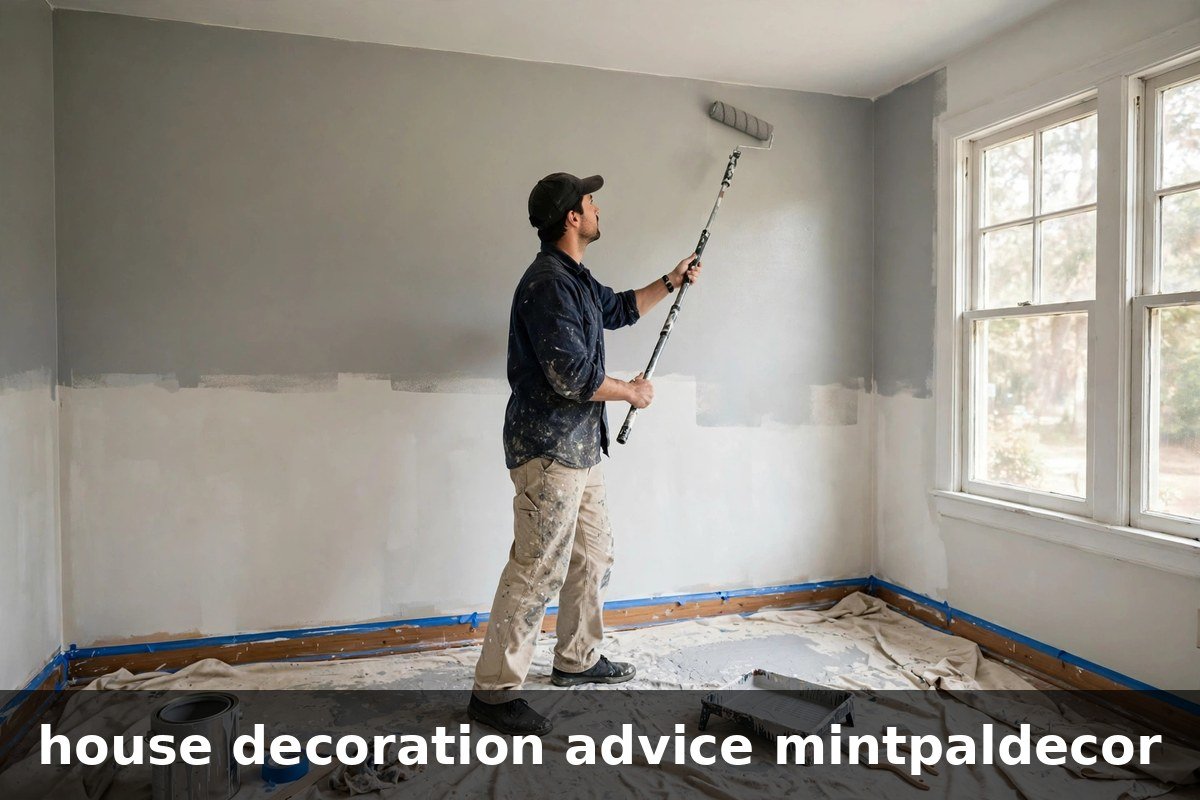
Order matters because the wrong order creates rework. Paint drips on new floors, dust settles on fresh paint, and early furniture gets dragged around. Start with repairs: fix leaks, damp patches, cracked plaster and sticking doors before any decoration begins, because a painted wall over a damp patch is a wall you will paint twice. Then do the dusty work, such as sanding floors, chasing cables for new lights, or fitting skirting boards. Only then pick up the roller and work from the top of the room downwards — paint the ceiling first, then the walls, and leave the skirting boards and door frames until last. Flooring comes after painting, and furniture comes last.
Work from the top floor down, or from the rooms furthest from the front door towards it, so you are not carrying materials through finished rooms. If you are living in the house, finish one room completely before starting the next, so you always have a clean place to sleep and eat. Leave the hallway and stairs until last.
| Step | Work to do | Why it comes at this point |
|---|---|---|
| 1 | Repairs | Leaks, damp and cracked plaster must be fixed before they are covered up |
| 2 | Messy work | Sanding, cabling and joinery create dust that would ruin fresh paint |
| 3 | Painting | Ceiling, then walls, then woodwork, while the old floor still protects the room |
| 4 | Flooring | New flooring goes down after paint so drips never land on it |
| 5 | Fixtures and lighting | Light fittings and curtain rails are fixed once walls and floors are finished |
| 6 | Furniture and soft furnishings | Large and soft items arrive last, into a clean and dry room |
How do you choose colours, materials and furniture that work together?
A house feels calm when its rooms share something. Choose three to five colours for the whole house: one main neutral for most walls, one or two supporting colours for feature walls and larger furniture, and one accent for cushions, artwork and small objects. A widely used decorator guideline is 60 percent main colour, 30 percent supporting colour and 10 percent accent. It is a guideline, not a rule, and it stops a room becoming a contest between loud colours.
Test paint before you commit. Paint a sample at least the size of a sheet of paper on the wall itself, and look at it in daylight and again in the evening under your normal lights, because the same paint can look warm at noon and grey at night. Never choose a wall colour from a small swatch or a phone screen alone. Bring flooring and fabric samples home and judge them in the room itself, not under shop lights.
Repeat materials as well as colours. If the living room has oak floors and brass handles, using oak and brass again in the hallway and kitchen makes the house feel planned. Buy the largest pieces first, because a sofa or a bed sets the scale of a room. Measure doorways and stair turns before ordering anything large: furniture that cannot get into the room is not a bargain.
Which mistakes cost homeowners the most, and how do you avoid them?
Of all the ways to waste money on decorating, the costliest is ordering furniture or flooring before you have measured the room and the route it must travel. A sofa that does not fit or a rug too small for the seating area costs money to return or live with, and a tape measure prevents it. Measure the space it will occupy and the route it must travel to get there. As a practical guide, the front legs of the sofa and chairs should sit on the rug, not beside it, or the room will look unfinished.
The second mistake is painting over problems instead of fixing them. Paint will not cure damp, hide a crack that is still moving, or stick to a greasy kitchen wall. Wash greasy kitchen walls, fill and sand cracks, and let filler dry fully before painting. Skipping preparation is why most home paint jobs look tired within a year.
The third mistake is buying too little. Flooring and tiles need extra material for cuts and waste, and paint needs enough from one batch to finish a wall without a visible join. As a practical estimate, allow 7 to 10 percent extra for flooring and tiles in a straightforward rectangular room, and more for awkward angles or patterned layouts. A second batch ordered months later risks a shade difference no one can fix. Finally, limit yourself to one metal finish and one wood tone, and plan where furniture goes during the work.
When should you call a professional instead of doing it yourself?
Decorating rewards honest self-assessment. Painting a bedroom and assembling flat-pack furniture suit a careful beginner. Electrical work, gas work, structural changes and anything involving height are different, and professional help is the cheaper option in the long run.
Call a licensed electrician for new circuits, wiring changes and any work inside a consumer unit. Call a registered gas engineer for anything connected to a gas supply, including moving a gas fire or cooker. A video tutorial is no substitute for training and certification here, and mistakes can endanger everyone in the house. Before removing a wall, get a structural engineer or qualified builder to confirm it is not load-bearing. Knocking on a wall cannot tell you whether it holds up the floor above.
Older homes need extra caution. In houses built before 1978, paint may contain lead, and the United States Environmental Protection Agency advises that lead paint should be tested and handled by certified professionals rather than sanded or scraped by hand. Similar-age homes may also contain asbestos in old floor tiles, pipe lagging or textured coatings, and disturbing it without a survey is a serious health risk. For large or skilled jobs such as plastering, fitting a kitchen or laying a large tiled floor, get at least three written quotes for the same scope, and check references and insurance first. A quote far cheaper than the others usually means something was left out. Agree in writing what is included and how payment is staged, and never pay in full before the work is finished and inspected.
What can house decoration advice mintpaldecor not do for you?
Good advice can give you a plan, a budget and a sequence, but it cannot see your house. It cannot tell you whether the damp patch behind the wardrobe is a leaking pipe or rising damp, whether a wall is load-bearing, or whether the floor is level enough for rigid flooring. Those questions need someone standing in the room with the right tools.
The advice here is general, and prices, products and building rules vary by place and by year. Always check local rules and product instructions, and treat figures labelled practical estimates as starting points for your own quotes. This article also cannot make taste decisions for you: a palette that looks calm in one home can feel cold in another, because light, room size and the furniture you already own change how a colour behaves. Test your shortlist in your own rooms. Fix structural problems, mould or a leaking roof first: decorating over damage only hides it for a season.
Frequently asked questions
How long does decorating a whole house take?
A whole house usually takes several weeks rather than several days, because paint needs drying time between coats and trades must be booked in sequence. As a practical guide, a single empty room can be finished in two to four days, while a lived-in three-bedroom house often takes four to eight weeks room by room. Rushing drying time between coats is the quickest way to a finish that peels.
Should I finish one room completely before starting the next, or decorate the whole house at once?
Decorate one room at a time if you are living in the house, because it gives you a finished space to use while the rest continues. Doing the whole house at once only makes sense if it is empty, since workers can move across rooms without shifting your furniture daily. Either way, keep the order of work the same in each room, and finish the messy jobs everywhere before painting starts anywhere.
How much paint do I need for a room?
Measure the walls first, then use the coverage figure printed on the tin. For one coat on a smooth, primed wall, a gallon usually covers about 32 square metres, so a room with roughly 37 square metres of wall needs a little more than one gallon per coat. Rough or unpainted surfaces absorb more paint, so buy an extra tin for the first coat on bare plaster.
Can I decorate a rented home?
You can, but you need the landlord’s written permission first for anything beyond hanging pictures, and the tenancy agreement decides what is allowed. Removable changes such as rugs, curtains, freestanding furniture and peelable wall decoration are usually safe, while painting, drilling and changing light fittings often need approval. Photograph every room first and keep receipts, so the deposit discussion is straightforward.
What is the cheapest way to make a room look different?
The cheapest visible change is usually paint, because one or two tins can change the whole feel of a room for far less than new furniture. After paint, the best value comes from light and textiles: a clean window, a lighter curtain, a larger rug and fresh cushion covers. Move the furniture before buying anything new: a better layout costs nothing.
Conclusion
house decoration advice mintpaldecor works best as a project with a plan, a budget and an order of work, rather than a series of impulse purchases spread across a year. Measure first, repair before you paint, keep the contingency for surprises, and hire a professional for work that can hurt you or your house. A home feels decorated when its rooms fit together, not when it holds the most expensive things you could buy. For more home improvement advice you can measure, visit Mintpaldecor.



2 comments