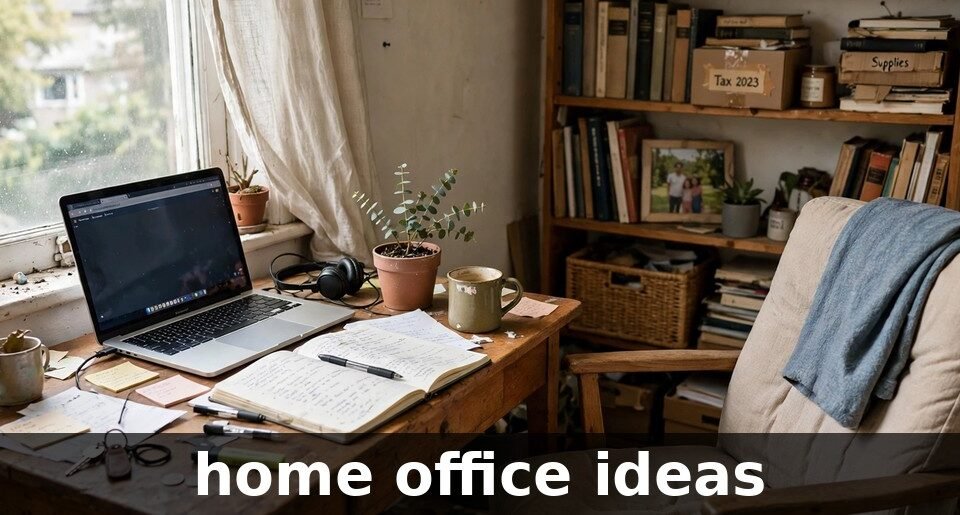
Good home office ideas turn a spare corner into a place where real work gets done, with a desk in good light and storage that hides the clutter. The best home office ideas start with the work itself, then fit the room around it.
Key Takeaways
- Start with the work itself — desk, chair and light — before buying decoration or storage.
- Angle the desk beside the window, so daylight falls on the work without shining on the screen.
- Hide work clutter in closed storage so the desk surface stays clear.
- Give video calls a calm, tidy background and light that falls on your face.
- In a small space, choose furniture that earns its floor area and folds the work away at the end of the day.
What makes a home office work differently from a spare room?
A spare room holds whatever does not fit anywhere else. A home office has one job: focused work. That difference decides everything in the room — where the desk goes, what the chair must do, how the light falls, and what is allowed to stay out on a surface. A spare room can absorb a pile of boxes and a drying rack; a home office cannot, because every object in it either helps the working day or gets in its way.
The desk is the centre of the room, so it gets the best position first, and everything else is arranged around it. The chair comes second: it must support a full working day, not just an hour of sitting. Then comes the light, then the storage, and decoration last. The thinking behind interior design mintpaldecor applies here in miniature — one room, one purpose, every choice visible at once — but the test is stricter, because a home office is judged by the work it produces.
Boundaries matter as much as furniture. A door that closes, a screen, or even a rug marking where the office ends all help the brain switch into work mode — and out of it at the end of the day. Without a boundary, work spreads across the house: the laptop on the kitchen table, papers on the sofa, a charger in every room. Home office ideas work best when the room is planned as a place to work, not as a store for everything that fits nowhere else.
Where should the desk go for the best light?
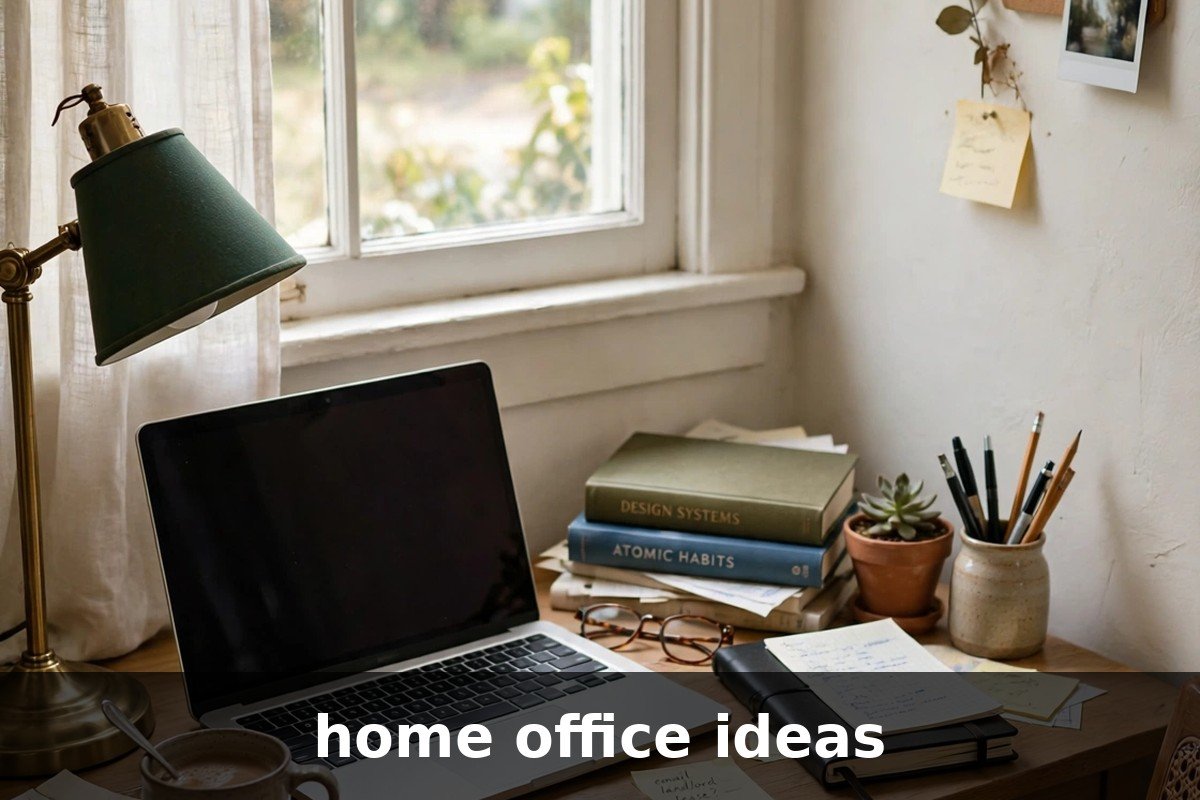
Daylight is the first thing to get right, because it decides how the room feels by mid-afternoon and how the worker looks on a video call. The best position for most desks is side-on to a window: light falls across the desk from one side, the screen stays free of glare, and the face is lit evenly for calls. A desk facing the window puts the sun straight on the screen and makes the worker squint; a desk with its back to the window puts the worker in shadow on camera and throws a dark shape across the screen.
Watch the light through the day before deciding. A window with gentle morning sun is kind to a desk; one with hot afternoon sun will need a blind or a curtain, or the desk will be unusable from two o’clock onwards. A room with little direct sun needs a pale wall colour, a good desk lamp, and no tall furniture in front of the window. As a practical estimate, a desk about 120 centimetres wide and 60 centimetres deep gives room for a screen, a keyboard and a notebook.
Measure the room before choosing the desk, because a desk too big for its corner makes the whole room feel cramped and leaves nowhere to push the chair back. Measure the wall width, the depth to the door swing, and the window sill height, then work out the floor area first. A Square Footage Calculator can do the arithmetic once the measurements are known, so the desk order matches the room rather than a guess.
| Desk position | Light on the desk | What to watch for |
|---|---|---|
| Side-on to the window | Even daylight across the desk, no screen glare | The near side of the desk can feel darker late in the day |
| Facing the window | Bright, direct light in the morning | Glare on the screen and squinting by midday |
| Back to the window | The room behind the desk is well lit | The worker is in shadow on video calls |
| Against a blank wall | Steady, controllable light from a desk lamp | Can feel closed in without a view or a picture |
How do you store work clutter out of sight?
Work makes clutter faster than any other activity in a house: papers, chargers, notebooks, pens, reference books, a printer, and the small things that arrive with every project. Left on the desk, they steal the working surface a little at a time until there is nowhere to write. The answer is closed storage — drawers, boxes and cupboards with doors — so the clutter has somewhere to go.
A desk drawer holds the daily things: pens, a notebook, a charger, the small items that are needed every day. A filing box or a drawer unit holds the papers that must be kept but are not needed today. A cupboard or a shelf with boxes holds the rest: spare cables, reference books, the printer, and the project that is on pause. The rule is simple: anything without a drawer or a box to go into will end up on the desk, and the desk will fill up again within a week.
Cables deserve their own plan, because a tangle of wires under a desk is both ugly and a daily annoyance. Fix a cable tray beneath the desk, use a single power strip, and give each device a short cord, so the floor stays clear and the desk stays tidy. Label the cables once, so the right one can be found without pulling the whole tray out. Keep one surface clear on purpose, because an empty surface is what makes the next working day start easily.
What should a video call show behind you?
A video call shows the room behind the worker as clearly as it shows the worker, so the background is part of the home office. The best backgrounds are calm and simple: a plain wall, a tidy shelf with a few books, a plant, or a framed picture. A background full of boxes, washing, or an unmade bed says the opposite, and it is the first thing the other person notices.
Light matters more than decoration. The light should fall on the worker’s face, not behind it: a window or a lamp in front of the desk, at about face height, gives a clear picture, while a bright window behind the worker turns the face into a silhouette. A small lamp on the desk works well in a dim room, and warm light looks kinder than cold white light. Keep the camera at eye height — setting the laptop on a small pile of books works fine.
Sound is the other half of a call, and a home office needs a door or at least a quiet corner for it. A headset helps, but it cannot hide a washing machine or a dog barking in the next room. If the house is noisy, the best fix is timing: schedule calls for the quiet hours, and warn the household when a call matters.
How do you make a small corner office comfortable?
A small corner can be a good home office if the furniture earns its floor area. The desk should fit the corner exactly, with room to push the chair back and stand up without hitting the wall. A wall-mounted shelf above the desk holds books and boxes without taking floor space, and a drawer unit under the desk keeps the daily things within reach.
Framing the corner as a small home improvement mintpaldecor job helps decide where the money goes: on the desk and the chair first, because they carry the working day, and on the storage second. Spend first on a chair that adjusts in height and supports the lower back — it counts for more in a home office than the desk does. A dining chair is fine for an hour, but after a full day it leaves a sore back and a tired neck.
Small spaces also need a way to end the working day. A laptop that closes, a desk that can be cleared in two minutes, and a drawer that swallows the papers all help the corner go back to being part of the room. A curtain or a folding screen that hides the desk after hours is worth having where the office shares a bedroom or a living room, because a desk that is always visible keeps the working day going long after the laptop is shut.
| Small-space setup | What it needs | Best for |
|---|---|---|
| Corner desk with wall shelves | A desk that fits the wall, shelves above, a drawer unit below | A spare bedroom corner or a living room nook |
| Folding desk against a wall | A drop-leaf desk, a chair that folds away | A room that must change back after work |
| Desk under a window | A narrow desk, a blind for afternoon sun | A bright corner with a view |
| Wardrobe office | A desk inside a wardrobe, doors that close | A bedroom where the office must disappear |
Where do home office ideas reach their limits?
A home office can make working from home far easier, but there are edges that decoration alone cannot cross, and it helps to know them before spending money. Household noise is the first one. A door helps, and a headset helps, but a thin wall and a busy house will still come through on a call, and no amount of shelving will make a shared living room quiet. If the job needs silence all day, the answer is a separate room with a door that shuts, not a prettier corner.
Size is the second edge. A corner that is barely wide enough for a desk cannot also hold a filing cabinet, a printer and a second chair, and no clever layout creates floor area that is not there. Choose what the office must do — a desk, a chair and one drawer unit, usually — and move the rest somewhere else in the house. A room that is asked to hold too much ends up doing none of it well.
Light is the third. A north-facing corner stays dim whatever the paint colour, and lamps can only add so much: they make the desk usable, but they cannot make the room feel bright. And a chair and a desk at the wrong height will ache by lunchtime, whatever the decoration around them — that is a furniture problem, and it is solved by measuring and by buying the right chair, not by adding pictures to the wall.
A home office works best when it is planned for the room and the working day as they actually are — noise, size and light included — instead of for an ideal version of either. Start with the building work where it is needed, keep the layout honest about the space, and the decoration will have something solid to sit on.
Frequently Asked Questions
How much does a home office usually cost?
A home office costs as much as its desk, chair and storage add up to. A simple setup — a plain desk, a decent chair and a shelf — costs far less than a fitted room with built-in storage, because the furniture is the expensive part.
What is the best desk size for a home office?
As a practical estimate, a desk about 120 centimetres wide and 60 centimetres deep suits most home workers: room for a screen, a keyboard and a notebook, with space for the arms. A smaller desk works where the work is mostly on a laptop, and a larger desk suits two screens or a lot of paper.
Can I work from a bedroom corner?
Yes, if the corner is treated as a workplace and not as part of the bedroom. A desk in good light, a chair that supports a full day, and a screen or curtain that hides the desk after hours keep the work separate from rest. Make sure the camera shows no bedroom decoration behind you, and keep the bed outside the frame.
How do I stop a home office taking over the house?
Give the work a boundary and a closing routine. A door that shuts, a drawer that swallows the papers, and a laptop that closes at the end of the day all help. Pack the desk away each evening, even if it takes only two minutes, so the morning starts with a clear surface.
Do I need a special chair for working from home?
For a full working day, yes: a chair with adjustable height and a back that supports the lower back. A dining chair is fine for an hour, but after a full day it leaves a sore back and a tired neck. The chair is the single purchase that most decides whether a home office gets used every day.
Conclusion
home office ideas work when the room is planned around the work: a desk in good light, a chair that supports a full day, storage that hides the clutter, and a background that looks calm on a call. Start with the work itself, measure the space, buy the desk and chair first, and add the rest in stages. For calculators, guides and more ideas, visit Mintpaldecor.